• Pharmacology Department

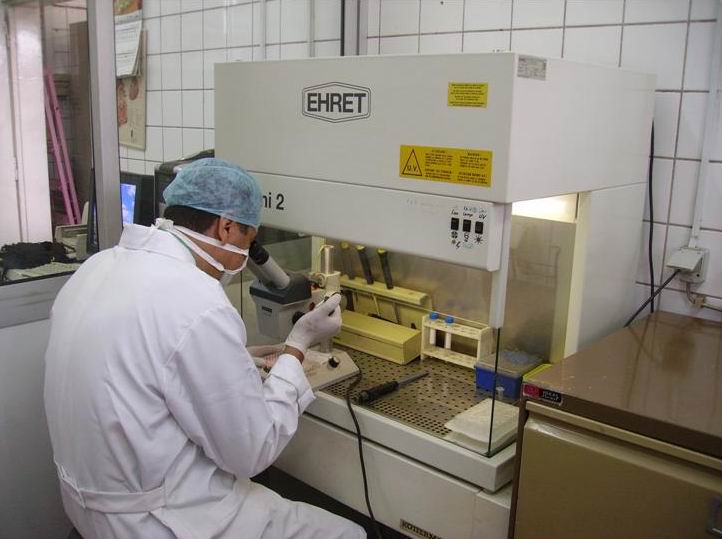
    Drug Evaluation and Discovery Unit (DEDO), a subsidiary of pharmacology laboratory, will help in support and development of the activities of the center ...

  • Pharmacology laboratory

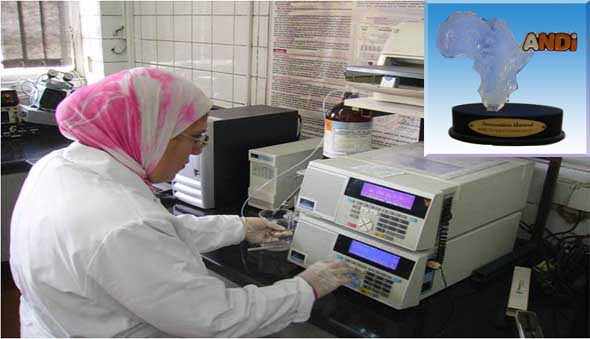
    In 2011, among 32 African institutions selected as ANDI Centres of Excellence in health innovation, TBRI represented by pharmacology laboratory; was assigned as the “ANDI Centre of Excellence on Anti-Trematodal R-D” African Network for Drugs and Diagnostics Innovation (ANDI). ....

  • Surgery Department

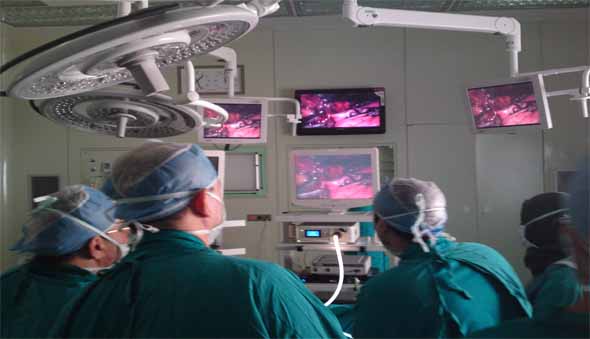
    Lectures on Gastro-oesophageal Reflux Disease (GERD) and different techniques of laparoscopic fundoplication, laparoscopic management of peptic ulcer disease. Practical: Live presentation and attendance of laparoscopic fundoplication, vagotomy and drainage procedures and if available laparoscopic splenectomy ...

  • Medical Division

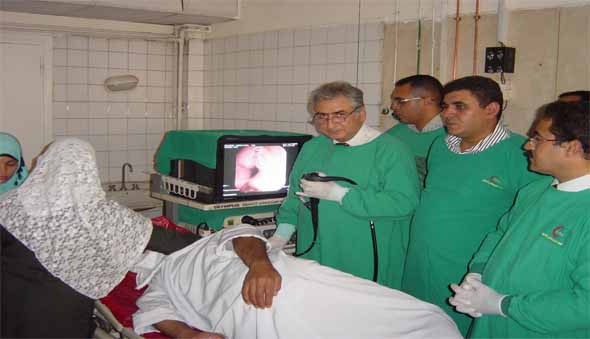
    Practical: direct supervised observation of live cases performed by our expert endoscopy team with full explanation of the maneuver over a period of 3 weeks. ...

‏إظهار الرسائل ذات التسميات Laboratory Division. إظهار كافة الرسائل

Immunology Department

1-  Basics of Tissue Culture
Candidates will learn the following: principles of tissue culture, handling of sterile materials under laminar flow, dealing with various equipments included in a tissue culture lab, identifying different cell, their specific culture media and cryopreservation of cultured cells and revival from liquid nitrogen. Course includes seminars and illustrative practical sessions.

 Duration: 5 days
 Fees: 500 EGP for Egyptians/200 US$ for non Egyptians
 Number of trainees:  6 / course

2-  Hands-on Working with Stem Cells
Regular Courses: include an introduction to stem cells, Mesenchymal stem cells (MSCs) isolation by plastic adherence method, hematopoeitic stem cells(HSCs) isolation using MiniMACs separation kit, stem cells culture, and propagation, stem cells surface markers identification by flowcytometer analysis, cryopreservation of stem cells  and their revival from liquid nitrogen.
 
Duration:  2 weeks
Fees: 3000EGP for Egyptians/ 750 US$ for non-Egyptians
Number of trainee: 3- 4/ course.
Optional Courses
1-    MSCs  in vitro differentiation into osteoblasts.
2-    MSCs  in vitro differentiation into adipocytes.
3-    MSCs  in vitro differentiation intochondrocytes
4-    MSCs  in vitro differentiation into hepatocytes.
5-    Pluripotent gene expression  of stem cells by molecular techniques
6-    Telomere length determination of stem cells by molecular techniques.

3-     Development of Antigen Detection Kits
A- Monoclonal Antibodies Production
Course includes immunization of BALB/c mice with specific antigens, myeloma cells revival from liquid nitrogen, and their culture, fusion of immunesplenocytes with myeloma cells, culture of fused cells in drug selection medium, screening for positive hybridomas by ELISA, cloning of positive hybridomas by limiting dilution method, propagation of single cloned hybridomas, cryopreservation of unused hybridomas and large scale production of monoclonal antibodies
    
Duration: 2 months,
Fees: 5000 for Egyptians/1500 US$ for non- Egyptians
Number of trainees: 2/ course

B- Characterization of Monoclonal Antibodies
Course includes ELISA to test for specificity, determination of MAbs, isotyping of MAbs by ELISA isotyping kit, Immunoelecrophoresis (IEP) for determination of ability of MAb to recognize a repetitive epitope. polyacrylamide gel electrophoresis (PAGE) of antigen followed by enzyme  linkedimmunoelectrotransfer blot technique (EITB) for determination of molecular weight  range of recognized antigen and Identification of the chemical nature of recognized antigen.

Duration: 2 week,
Fees: 1000EGP for Egyptians/ 350 US$ for non-Egyptians
Number of trainees: 3-5 / course

C- Application of Monoclonal Antibodies  in Antigen Detection  
Purification of MAbs from ascitic fluid by different purification methods,  conjugation of MAb to horse-radish peroxidase, standardization of sandwich ELISA for antigen detection using MAbs as antigen capture and antigen detection horse radish peroxidase conjugate and modification of sandwich ELISA by loading of MAbs on gold nanoparticles

Duration: 3 weeks,
Fees: 1500 for Egyptians/500 US$ for non- Egyptians
Number of trainees: 3-5/ course

 D- Hands-on ELISA Technique
Course includes an overview to antigen antibody reactions, principle of ELISA technique and its different types, ELISA performance and results interpretation and how to deal with errors that one may face during practical application of ELISA and their corrective and preventive actions

Duration: 3 days
Fees: 300 for Egyptians/ 150 US$ for non- Egyptians
No of trainees: 5-10/course

  Al l courses include seminars and illustrative practical sessions.
 All techniques and materials to be used in the training courses will be accompanied with detailed protocols

Anaesthesia Department

1-Airway Management Workshop
 Theoretical overview on anatomy of airway, airway problems, types of supraglottic devices, technology of fiber-optic endoscopy. Course includes hands on practice on the use of different supraglottic devices and fiber-optic intubation using models.
Duration: 2 days
Fees: 500 EGP for Egyptians /250 US $ for non-Egyptians 

2-Hemodynamic  Monitoring Workshop
 Lectures on basic physical principles and hemodynamic calculations of trans-eosophgeal Doppler, Masimo and Picco apparatuses.  Hands on practice on the three monitors with data interpretation .
 Duration: 2 days
 Fees: 500 EGP for Egyptians /250 US $ for non-Egyptians 

3-Regional Anesthesia Workshop
 Theoretical overview of the spinal vertebrae, epidural and subarachnoid spaces with lectures on local anesthetics pharmacology ( pharmacokinetics and pharmacodynamics)  followed by practical training on localization and injection of spinal, continuous spinal, epidural and caudal analgesia
Duration: 2 days
Fees: 500 EGP for Egyptians /250 US $ for non-Egyptians  

4-Sonar Guided Nerve Block & Venous Access
Duration: 2 days
Fees: 500 EGP for Egyptians /250 US $ for non-Egyptians 

Environmental Research Department

1-     Evaluation of Toxicity of Molluscicides :
The course includes evaluation of the applied and promising molluscicides of chemical and natural origins on both target and non-target organisms and environment
Duration: 5 days
Fees: 1000EGP for Egyptians/125US$ for non Egyptians

2-     Ecological Assessment of  Irrigation Systems:
The course includes assessment of canals and agricultural drainage systems and recording their transmission status for parasitic diseases as schistosomiasis and fascioliasis
Duration: 7 days
Fees: 2000 EGP for Egyptians/250 US$ for non Egyptians


Medical Malacology Department

1-    Snails Identification by Using Different Methods
The course includes identification of snails by morphology, anatomy and PCR methods.

2-    Methods of Snails Collection
      from natural habitat, transportation to the lab and examination
for cercarial shedding, identification of cercariae 

3-  Snail Control by Using Biological and Chemical  Methods

4-  Ecological  Data
    a- Chemical  analysis for water sulphides, dissolved oxygen, etc.
    b- Physical  parameters such as temp, ph, turbidity, conductivity, velocity of water.
    c- Identification the flora and fauna.

5-  Cercariometry using 2 methods:

    a- Mice infection 
    b- Centrifugation.

6-  Maintaining and Breeding snails.

7-  Snails Infection and examination for Cercarial Shedding.

8-  Mollsucicidal Activity of Compounds and Plant Extracts at Lab or at Snail Research Station

 Fees/ course
: 600EGP for Egyptians/200 US$ for non Egyptians

Medical Malacology Department

1-    Snails Identification by Using Different Methods
The course includes identification of snails by morphology, anatomy and PCR methods.

2-    Methods of Snails Collection
      from natural habitat, transportation to the lab and examination
for cercarial shedding, identification of cercariae 

3-  Snail Control by Using Biological and Chemical  Methods

4-  Ecological  Data
    a- Chemical  analysis for water sulphides, dissolved oxygen, etc.
    b- Physical  parameters such as temp, ph, turbidity, conductivity, velocity of water.
    c- Identification the flora and fauna.

5-  Cercariometry using 2 methods:

    a- Mice infection 
    b- Centrifugation.

6-  Maintaining and Breeding snails.

7-  Snails Infection and examination for Cercarial Shedding.

8-  Mollsucicidal Activity of Compounds and Plant Extracts at Lab or at Snail Research Station

 Fees/ course
: 3000EGP for Egyptians/500 US$ for non Egyptians

Medicinal Chemistry Department

Extraction and Isolation of Active Ingredients from Medicinal Plants and  Evaluation of their Biological Activities
The course includes chromatographic isolation of chemical constituents from bioactive medicinal plants using different methods as HPLC, glass columns, paper chromatography, thin layer chromatography using different adsorbents as silica gel, polyamide, sephadex .
 Identification of the chemical structure of the isolated compound using different spectroscopic analysis as mass spectroscopy, proton and carbon nuclear magnetic resonance, ultraviolet and infrared radiation techniques will also be studied.
Assessment of   the different biological activities as antioxidant techniques, antimicrobial and measuring cytotoxicity using brine shrimp method will also be performed.
Duration:  10 days
Fees:  1000 EGP for Egyptians / 150$ for non-Egyptians

Biochemistry Department

1-    Extraction Methods for Nucleic Acids (DNA and RNA) from Biological Samples
The course includes principles, materiasl and reagents as well as demonstration and practical application of the methods
Duration:  10 days
Fees: 600 EGP for Egyptians/ 600 US$ for non Egyptians
2-    Applications of PCR and Quantitative RT-PCR for Diagnosis of Pathogens:
The course includes definition and principle of PCR and different applications of PCR in diagnosis of infectious diseases, cancer and genetic abnormalities.
Duration:  10days
Fees: 1000 EGP for Egyptians/ 1000 US$ for non Egyptian candidates
3-    Cloning and Expression of Recombinant Proteins:
candidates will learn the method of isolation of the target regions in the RNA/DNA genome by specific primers, cloning of PCR product into an expression vector , transformation of the clone into an appropriate bacterial host cell, induction and expression of the proteins of the cloned genes and purification of the expressed proteins by affinity chromatography
Duration:  10 days
Fees: 1000 EGP for Egyptians/ 1000 US$ for non-Egyptians
4-    Determination of SNPs Associated with Different Genetic Diseases (il 28,  il 4):
candidates will learn the meaning and significance of single nucleotide polymorphism (SNP ,pronounced snip,plural snips)and the analytical methods used  to discover known snips and how to discover novel SNPs including the use of real time PCR
Duration:  10 days
Fees:  600 EGP for Egyptians/ 600 US$ for non-Egyptians

Haematology Department

1-Basic Laboratory Hematology
This course is intended to provide the participant with the necessary basic training in hematology  laboratory techniques under the supervision of highly experienced specialists Course topics include: Automated blood cell counters (principles & histograms), Interpretation of CBC, diagnostic approach to anemia, red blood cell morphology, screening tests for hemolytic anemia and screening coagulation Practical training includes: Operating automated blood cell counters, blood smear preparation and staining Microscopic slide examination of various RBCs morphology, ESR, Screening tests of hemolytic anemia: (Reticulocyte staining and count, Coomb's test (direct and indirect), Sickle test, Osmotic fragility test), Morphologic examination of mature and immature WBCs, Morphologic examination of normal and megaloblastic erythropoiesis, Coagulation profile: PT, PTT and bleeding time
Duration: 5 days
Fees: Egyptians 500 EGP /200 US$ for non-Egyptians

2-Principal Blood Bank Techniques:
This course will offer the trainee the essential training in blood bank techniques. With completion of the course, the trainee will be able to carry out these techniques on an experienced level. The course includes training on:
·  Blood groups & Rh testing
·  Blood donation
·  Serological examination of donated blood ( HCV, HBV, HIV& syphilis) by ELISA & chemiluminescence techniques
·  Cross matching procedure (manual & card methods)
·  Preparation of packed RBCs
·  Preparation of FFP
·  Preparation of platelet concentrate
·  Preparation of cryoprecipitate                                                                        
Duration: 5 days                                                                                                                                                 
 Fees: Egyptians 500 EGP/ non-Egyptians 200 US$

3-Thrombosis and Hemostasis:
During this course, participants will acquire clinical and basic knowledge in this field. The course is also eligible for a senior hematologist looking for updated information.
Course topics include:
·  Current concepts of the coagulation system
·  Control of coagulation
·  Hemostasis in patients with impaired liver function
·  Venous thrombosis: manifestations, diagnosis and therapy
·  How to approach a patient with bleeding
·  How to approach a patient with venous thrombosis
·  Platelet disorders
·  DIC identification and diagnosis
·  Novel antithrombotic drugs
Practical training:
Measuring PT, PTT and TT, coagulation factor assays and D- dimer level by semi and fully automated coagulometers.
Duration: 5 days
Fees: Egyptians 750 EGP/ non-Egyptians 300 $

4-Hematopoietic Stem Cell (HSC):
This course covers a wide range of topics from basic science to clinical aspects including HSC biology, separation and use in hematological and non-hematological diseases.

Course topics include:
·  HSC biology
·  Methods of HSC collection
·  Identification of HSC
·  Comparison with other sources of stem cells
·  HSC transplantation in hematological diseases
·  HSC therapy in non-hematological diseases
  Practical training:
·  Separation of HSC by fully automated closed system cell separator
·  Identification of HSC by flow cytometry
Duration: 5 days
Fees: Egyptians 1500 L.E/ non Egyptians 500 $

Pathology Department


1-    Immunohistochemical and Cell Image Analysis of Tissue Samples
Duration: 2 weeks
Fees: 1000 EGP for Egyptians /600 US$ for non-Egyptians

2-     Procedures and Technical Points in Cytology and FNA of body fluids.
Duration: 2 weeks:
 Fees: 500 EGP for Egyptians /300 US$ for non-Egyptians

3-    Techniques of Tissue Processing
Course includes techniques of  embedding, fxation, cutting and different stains for routine study.
 Duration: 2 weeks
 Fees: 1000 EGP for Egyptians /400 US$ for non-Egyptians

4-    Techniques and Procedures of Immunohistochemical Stains.
 Duration: 2 weeks:
Fees: 1000EGP for Egyptians /200US$ for non-Egyptians

5-    Techniques and Preparation of Frozen Sections and their Staining.
Duration: 2 weeks
Fees: 1000 EGP for Egyptians /200US$ for non-Egyptians

6-    Cell Image Analysis of Tissue Specimens.
Duration: 2 weeks
Fees: 1000EGP for Egyptians /200US$ for non-Egyptians

7-    Fluorescent in-situ hybridization technique (FISH)
Duration: 2 week 
Fees: 2000EGP for Egyptians /400US$ for non-Egyptians

Electron Microscopy Department

1-    Electron Microscope in Visualization of Nanoparticles
 The course focuses on the EM techniques and how to examine the nanoparticles by EM
Duration: 6 days
 Fees: 900 EGP for Egyptians /800US $ for non Egyptians

2-    Immunoelectron Labeling in Research and Diagnosis
The course explains the technique of immunoelectron microscopy and its role in evaluation of infectious diseases
Duration: 6 days
Fees: 900 EGP for Egyptians /800US $ for non Egyptians

3-    Value of Electron Microscopy in Research and Early Diagnosis of Disease
 The course focuses on the techniques and personnel experience of the department in research using EM
 Also it highlights the value of EM in the detection of cellular changes for early diagnosis of diseases.
Duration: 6 days 
Fees: 900 EGP for Egyptians /800US $ for non-Egyptians

4-    Electron Microscopy and Parasitic Diseases
 The course focuses on the techniques and the study of parasites using EM 
Duration: 6 days 
Fees: 900 EGP for Egyptians /800US $ for non-Egyptians

Microbiology Department

1- Microbiological Diagnosis of Infectious Diseases
The course includes training on culture of different clinical specimens
 (urine, stools, pus ,etc.), blood and other body fluids using conventional 
culture techniques and automated systems: Bact/ALERT and BACTEC
 9050; identification of clinical isolates to the species level using the
 Analytical Profile Index (API) and antimicrobial susceptibility testing of isolates
 Duration: 5 days
Fees: 1000 EGP for Egyptians/ $ 250 for non-Egyptians
2- Bacterial and Fungal Cultures on Automated Instruments
Course includes culture, species identification, antimicrobial susceptibility
 testing and recording of the minimum inhibitory concentration (MIC) 
of different antibiotics by VITEK2 automated system”                                                      
 Duration: 5 days
 Fees: 2000 EGP for Egyptians/ $ 400 for non-Egyptians
3- Guidelines on microbiological specimen collection and transport
Duration: 3 days    
 Fees: 300 EGP for Egyptians/ $ 100 for non-Egyptians